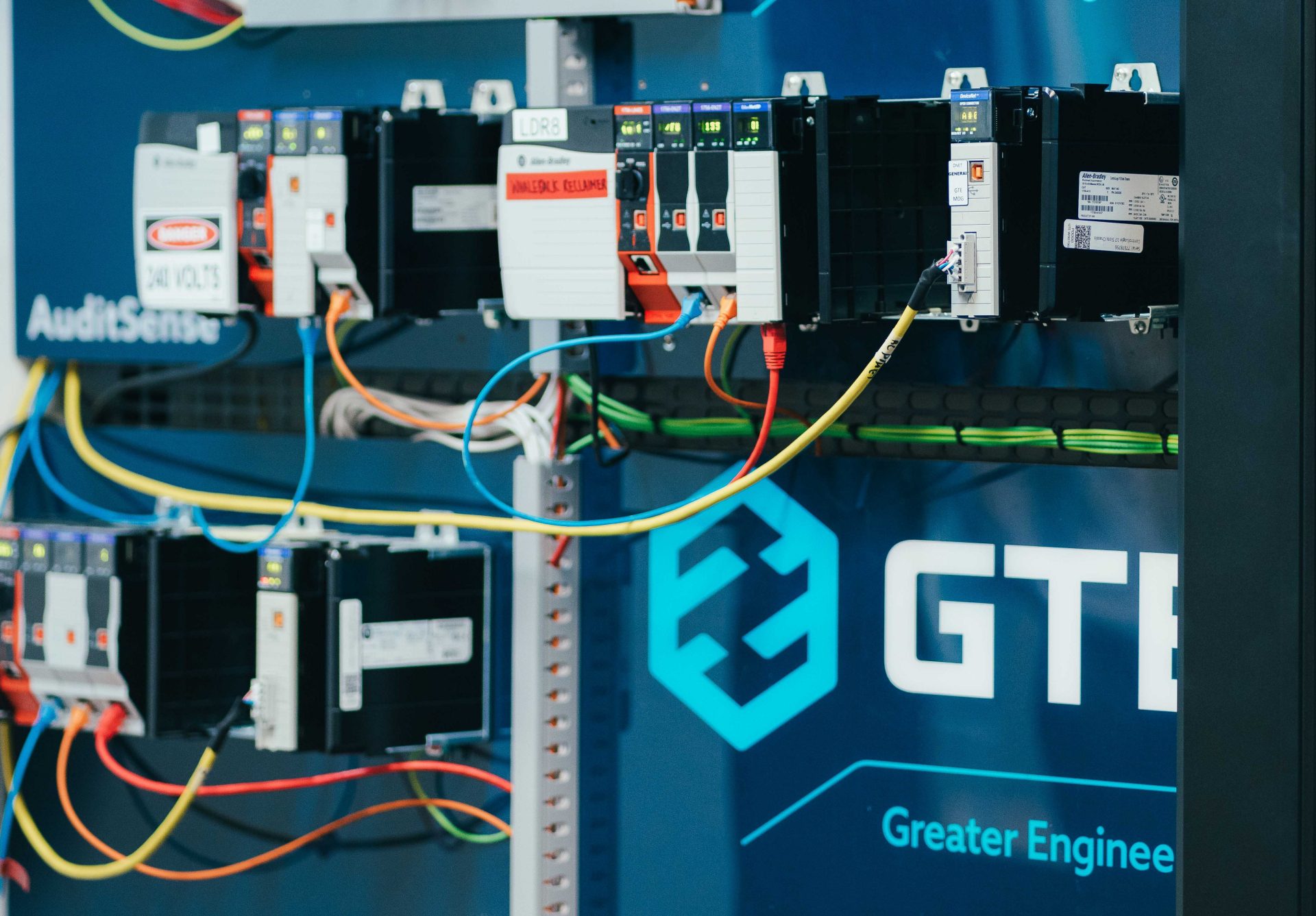
DeviceNet to EtherNet/IP Network Migration

Project Details

Client:

Tier 1 Miner

Date

June 2026 - September 2026

Location:

Pilbara Region, WA

Project Background

DeviceNet is a legacy fieldbus architecture that many operators are progressively retiring in favour of EtherNet/IP. EtherNet offers a number of distinct advantages over DeviceNet which include:

  • Plug and play configuration
  • Faster Data Speeds
  • Larger Data Payloads
  • Greater network capacity
  • Lower hardware costs

GTE were engaged by their client on this project to engineer the migration of the DeviceNet Network on a reclaimer and stacker to EtherNet/IP. The scope of the project included engineering design, preparation of drawings, supply of hardware, and commissioning support during the cutover during a planned shutdown.

Each machine had its own dedicated PLC and has a set of field devices distributed along the boom, the cable reeler and the hose reeler. The boom encoder and the digital I/O blocks in the cable reeler and hose reeler marshalling panels communicated with the machine PLC over DeviceNet, bridged into the control system through an Anybus gateway.

The Challenge

The existing DeviceNet Network arrangement presented several problems:

  • Hardware Obsolescence: The DeviceNet CompactBlock I/O modules and the Anybus gateway are end-of-life technology, with diminishing spares and vendor support and a growing risk of unplanned outages on production-critical machines
  • Single Point of Failure: All Network devices reached the PLC through one protocol gateway, so a gateway fault could take the boom encoder and both reeler I/O blocks offline at once.
  • Boom Protection Dependence: The boom position encoder, a key input to the machine’s boom protection scheme, sat on the obsolete network. Our client wanted the protection scheme improved, not just preserved.
  • Brownfield Constraints: Any replacement had to align to the existing ControlLogix PLC and Citect SCADA platform, comply with client standards, align to other in-flight projects and conform to client change management processes, and be installed and commissioned within a single shutdown window.
  • Overlapping Works: The migration shared battery limits with a concurrent MCC upgrade (also being executed by GTE), so the two scopes had to be designed together to avoid conflicting drawing revisions, duplicated panel work and interface gaps during the shutdown.
  • Procurement Timing: Long-lead EtherNet/IP hardware had to be on site before the shutdown, yet the detailed design and final Bill of Materials could not be completed until after order placement. Our client also needed commissioning spares and operational spares included so that the machine could be supported from day one.

The Solution

The DeviceNet Network devices on the two machines were replaced with native EtherNet/IP hardware, eliminating the protocol gateway and bringing the reeler I/O and boom encoder directly onto the machine’s Ethernet control network.

GTE delivered the migration end to end: the engineering design, the procurement of the hardware components, the PLC and SCADA modifications, network configuration and change-management support, off-site testing, the cutover documentation, and the control system, electrical and industrial network commissioning during the shutdown. Site installation was carried out by third-party electrical contractors under GTE’s technical governance.
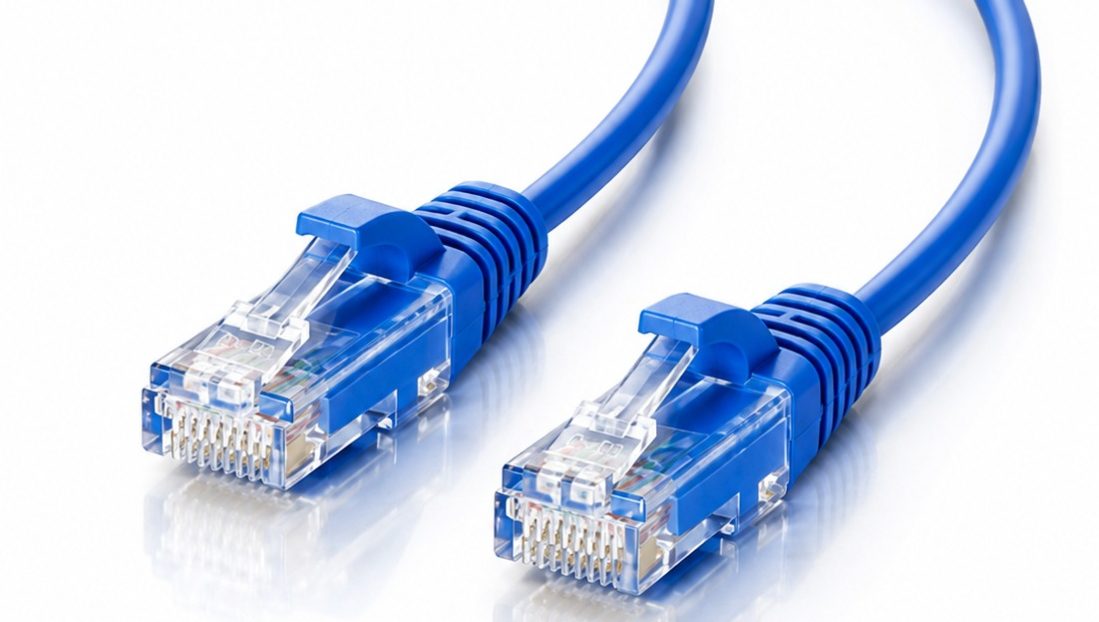

Ethernet cable with RJ45 connectors

Key Features of the Migration

  1. Gateway-free EtherNet/IP Architecture
    The Anybus DeviceNet gateway was deleted from the design. Field devices now communicate natively over EtherNet/IP removing the single point of failure and a layer of protocol translation, and simplifying diagnostics and future maintenance.
  2. Flex 5000 Remote I/O at the Reeler Marshalling Panels
    DeviceNet 16-point digital input blocks were replaced with Allen-Bradley Flex 5000 EtherNet/IP remote I/O assemblies
  3. EtherNet/IP Absolute Encoder for Boom Protection
    The DeviceNet encoder was replaced with an optical absolute encoder integrated directly over Ethernet, with a spare unit supplied. Bringing the boom position signal onto the Ethernet network with a modern absolute encoder underpinned the improved boom protection scheme.
  4. Built-in Spare Capacity and Operational Spares
    Each remote I/O assembly carries spare analogue input and relay output capacity, and the final solution included a full set of commissioning and operational spares. The machines can now be supported and repaired in the event of equipment failure without procurement delays.
  5. Standards-aligned Design
    The hardware selection and network arrangement followed client standards and the requirements of parallel projects, and the migration design developed by GTE became a building block of our client’s wider staged transition of MCC interfaces to Ethernet-based control rather than a one-off fix.
  6. Procurement De-risked Around the Shutdown
    Hardware was quoted as a provisional allowance while the final Bill of Materials was still being developed, allowing our client to approve budget and place the order early enough to meet the shutdown deadline. The package was supplied as a single fixed-price line, delivered and tested in GTE’s CBD based test laboratory, with quantities confirmed through the engineering review.
  7. Integrated Engineering Across Overlapping Scopes
    Because the DeviceNet migration and a parallel MCC upgrade shared battery limits, GTE engineered them together: one set of updated IFT / IFC drawings, one set of electrical load reviews for the affected panels, and one coordinated PLC code release. This removed the interface risk that comes from two packages changing the same panels and code in the same shutdown.
  8. Tested, Documented and Commissioned Cutover
    The PLC changes (integration of the new EtherNet/IP devices, removal of the redundant gateway logic, updated diagnostics and alarms) and the Citect faceplate updates were tested off-site before release. GTE prepared the FAT, SAT, management of change and cutover plan documentation and prepared the historian tag updates. During the shutdown GTE engineers commissioned the control system, electrical and industrial network changes and provided technical governance over the third-party installation works, followed by delivering as-built drawing and document updates.

GTE engineer with industrial network hardware in the test laboratory

Project Outcome

The cutover was executed seamlessly during a shutdown, and both the machine migrations were brought into service successfully, with positive feedback from the client.

Key Achievements:

  • Obsolete DeviceNet Network hardware replaced with supported, standards-compliant EtherNet/IP equipment in a single shutdown
  • Protocol gateway eliminated, removing a single point of failure from the reeler I/O and boom encoder path
  • Boom position brought onto the Ethernet control network with a modern absolute encoder, supporting the improved boom protection scheme
  • Spare I/O capacity and operational spares delivered with the package
  • Hardware defined, approved and delivered ahead of the shutdown despite the design still being finalised at order placement
  • DeviceNet migration and MCC upgrade engineered as one coordinated package, avoiding rework and interface gaps

The network migration gave our client a supportable, fully Ethernet-based device network on two production-critical machines and set the pattern for retiring DeviceNet networks across remaining machines.

We Want to Hear from You.

If you’re ready to hear more about how we can help your business operate safely and sustainably, get in touch with us today.

E-mail Head Office

admin@gtegroup.com.au

Physical Address

Level 2
109 St Georges Terrace
Perth, WA, 6000
Australia

Postal Address

PO Box 7099
Cloisters Arcade
Western Australia, 6850